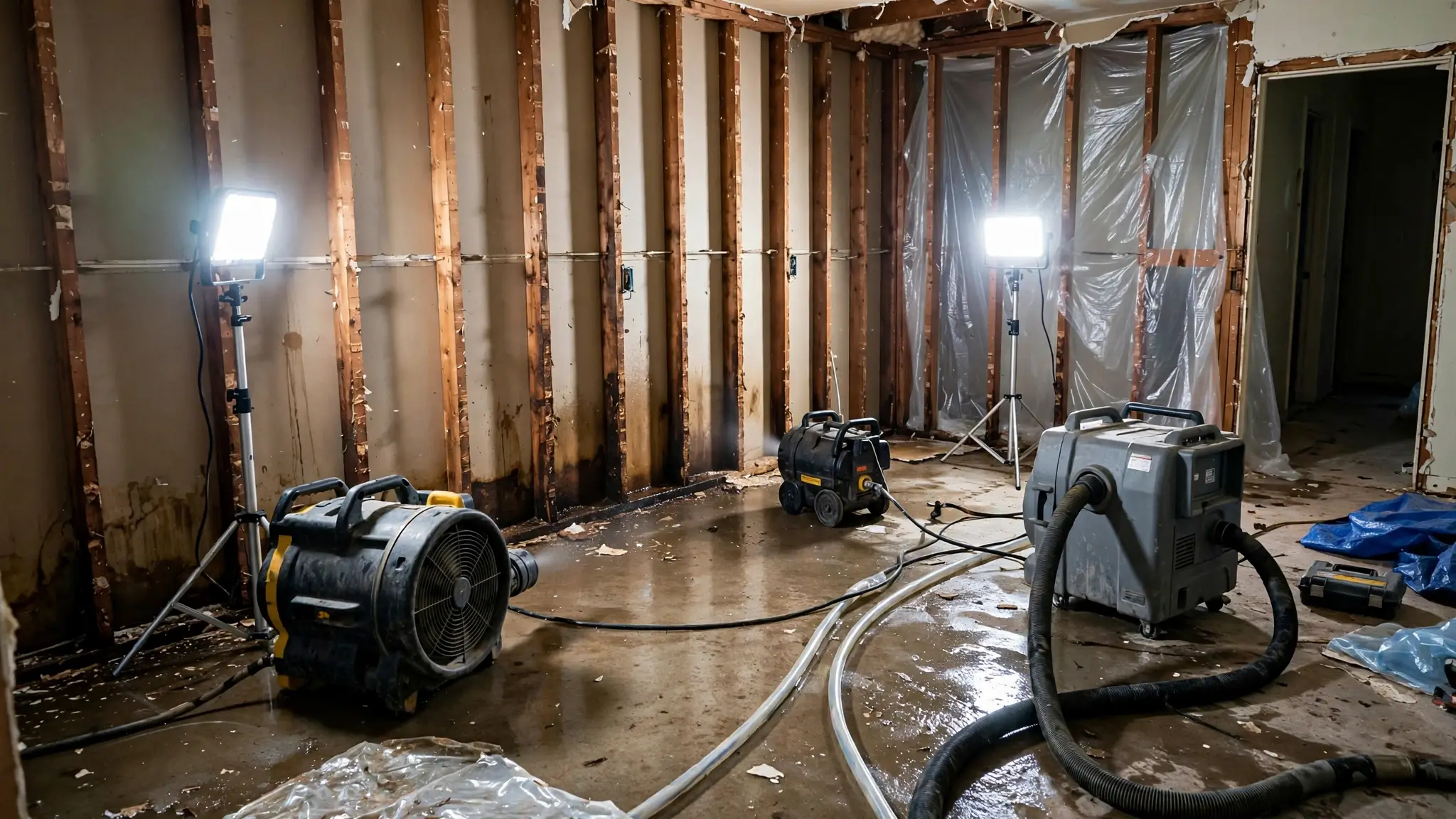
When water is pouring across your floor, "how long will this take" is the first question after "how do I stop it." The honest answer: it depends on how much water, where it went, what it touched, and how fast extraction started. But the process follows a predictable sequence, and understanding each phase — extraction, drying, and repairs — tells you where the time actually goes. Here is a realistic timeline for burst pipe water damage cleanup in a La Crosse home.
Phase 1: Water Extraction — Hours
Extraction is the fastest phase and the most urgent. Professional crews arrive with truck-mounted extractors and high-capacity pumps that pull standing water out in hours — a basement that would take a homeowner days with a shop vac can be extracted in a single visit. Speed here is everything: every hour water sits, it wicks further into drywall, subflooring, and framing, and each inch of spread adds drying time later. This is why our burst pipe water extraction crews prioritize arrival speed — the extraction window is measured in hours, not days.
During extraction, crews also remove what cannot be saved: saturated carpet padding, swollen baseboards, and insulation that has wicked water. Getting these materials out early prevents them from feeding moisture back into the structure during drying.
Phase 2: Structural Drying — Days
Drying is where most of the timeline lives. After standing water is gone, moisture remains inside drywall, wood framing, subfloors, and concrete — and it has to be coaxed out with industrial air movers and dehumidifiers running continuously. A typical timeline: a contained burst in one room may dry in two to three days; water that spread through wall cavities or under flooring can take four to seven days or longer. Crews do not guess at this — they take daily moisture meter readings and keep equipment in place until the materials reach documented dry standards.
Winter makes this phase harder in La Crosse. Cold outdoor air holds less moisture, and a sealed-up January house has poor air exchange, which slows evaporation from building materials. Professional dehumidification compensates, but a deep-winter burst can add drying days compared to the same loss in July. Homeowners on the North Side see this every season — if you are up there, our North Side burst pipe cleanup page covers what local crews watch for.
Phase 3: Repairs and Restoration — Days to Weeks
Once everything is verified dry, the rebuild begins: replacing drywall sections, baseboards, insulation, flooring, and repainting. This phase depends entirely on the scope — a single burst behind one bathroom wall might mean a few days of repair work, while a multi-room flood with finished-basement damage can take weeks, especially if flooring or custom finishes need ordering. This is restoration work, distinct from the cleanup itself, and it is the phase where homeowners regain control of the schedule.
What Extends the Timeline
Several factors stretch a cleanup beyond the standard timeline. Hidden moisture is the biggest: water that ran inside wall cavities or under a slab takes longer to find and longer to dry than water sitting on an open floor. Mold is the second — if the burst went unnoticed for a day or more, or if drying was delayed, mold remediation becomes its own phase before repairs can start. See our burst pipe mold remediation guide for how that process works.
Material type matters too. Hardwood floors and plaster walls dry slower than drywall and carpet. Contaminated water — a burst that mixed with sewage or sat long enough to turn unsanitary — requires additional sanitizing steps. And the single largest variable is delay: a burst discovered in minutes dries in days; the same burst discovered after a weekend away can double the drying phase and add mold to the scope.
How to Shorten Your Timeline
You cannot change the physics of drying, but you can change everything before it. Shut off the water fast, get extraction started within hours, and keep the drying equipment running without interruption — turning equipment off overnight "to save noise" resets progress. Do not start repairs until moisture readings confirm the structure is dry; rebuilding over wet framing traps moisture and guarantees a second round of work. The fastest cleanups we see share one trait: a homeowner who called for burst pipe water extraction immediately instead of waiting to see if things would "dry on their own."
Frequently Asked Questions
How long does the water extraction itself take?
Standing water extraction usually takes a few hours with professional truck-mounted equipment. The bulk of the timeline is drying, not extraction — drying takes days because moisture must be pulled from inside materials, not just off the surface.
Can I stay in my home while it dries?
Usually, yes. Air movers and dehumidifiers are loud but safe to live around, and crews typically section off the drying area with barriers. If the damage is extensive or electrical systems were affected, temporary relocation may be necessary.
Why does drying take longer in winter?
Cold outdoor air holds less moisture, and sealed-up winter homes have poor air exchange, which slows evaporation. Professional dehumidifiers compensate, but a January burst in La Crosse can add drying time compared to the same loss in summer.
How do I know when drying is actually finished?
Professionals do not judge by looks or feel. They take moisture meter readings of walls, floors, and framing and compare them against dry standards for each material. Drying is done when the numbers say so, not when the surface looks dry.
The rule of thumb: extraction in hours, drying in days, repairs on their own schedule — and fast action at the start shortens every phase after it. If water is standing right now, call (608) 817-7864. La Crosse Burst Pipe Cleanup will connect you with a local crew, and you can read more about burst pipe water extraction to know exactly what happens when they arrive.